(The Time of Things)
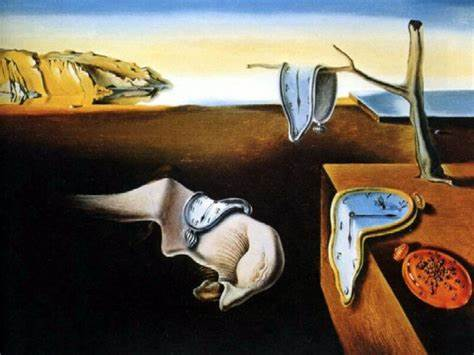
(The Persistence of Memory – Salvador Dalí.)
Se fosse possível obter, junto ao nascimento, um relógio que marcasse quanto tempo aquela existência perduraria, atrevo-me a dizer que esta seria uma das ferramentas mais destrutivas da humanidade. Destrutiva, pois, se soubéssemos quanto tempo haveria de vida, certamente ficaríamos presos em sua falta ou excesso e, a partir disso, dificilmente aproveitaríamos o processo.
Não à toa não existe a possibilidade de se calcular quanto tempo temos, apenas quanto tivemos. Mesmo isso, apenas como uma ferramenta, já que o que importa do tempo é sua passagem e não a sua contagem.
A partir deste entendimento, creio que o relógio possa concluir sua missão, que é de ferramenta, ferramenta de observação do tempo.
(If it were possible to obtain, at birth, a clock that marked how long that life would last, I dare say that this would be one of the most destructive tools for humanity. Destructive because, if we knew how much time we had left, we would certainly become trapped in its lack or excess, and as a result, we would hardly make the most of the process.
It is no coincidence that it is impossible to calculate how much time we have, only how much we have had. Even this is only a tool, since what matters about time is its passage, not its counting.
Based on this understanding, I believe that the clock may fulfill its mission, which is to be a tool, a tool for observing time.)
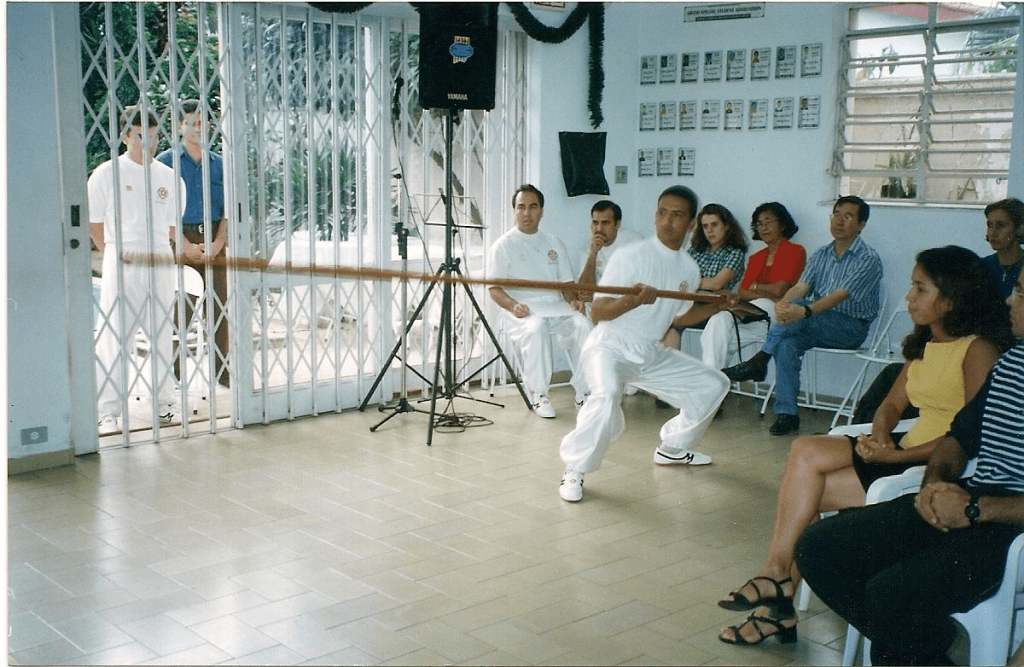
(Senior Master Julio Camacho. First public presentation of the Medial Superior Level, 1998.)
Se o tempo só pode ser compreendido pelo que vivemos, essa ideia também se reflete no Kung Fu. No Mo Gun, ambiente onde realizamos a expressão marcial do Kung Fu, algumas falas sobre a prática me ajudaram a perceber isso. Por exemplo, as vezes em que ouvi, no Mo Gun, que o patriarca Moy Yat explicava que o exercício do Kung Fu deveria ocorrer 24 horas por dia, todos os dias. Eu ficava abismado com esta afirmação, e isso se potencializava quando ouvia, em diversos encontros, comentários sobre as poucas horas de sono do Grão Mestre Leo Imamura e meu mestre, Mestre Sênior Julio Camacho. Cheguei a suspeitar que o patriarca Moy Yat não dormia. É óbvio que isso não era possível, mas demorei para chegar a alguma conclusão plausível.
O contato com meu mestre e sua constante sugestão da busca pela excelência fez-me destrinchar um caminho viável para a conclusão do meu mistério: Dormir é uma arte. Por isso, a necessidade de um bom ambiente para o sono e, mais importante, o que justifica o descanso: quero dizer, a exaustão do corpo.
Neste sentido, creio que a quantidade de horas não seja um fator relevante para garantir uma boa noite, mas sim, outra vez, sua qualidade.
(If time can only be understood through what we experience, this idea is also reflected in Kung Fu. In the Mo Gun, some statements about the practice helped me realize this. For example, the times I heard, in the Mo Gun, that Patriarch Moy Yat explained that the practice of Kung Fu should occur 24 hours a day, every day. I was astonished by this statement, and it became even more striking when I heard, in various meetings, comments about the few hours of sleep of Grand Master Leo Imamura and my master, Senior Master Julio Camacho. I even suspected that Patriarch Moy Yat didn’t sleep. Obviously, this wasn’t possible, but it took me some time to reach a plausible conclusion.
The contact with my master and his constant suggestion to seek excellence led me to break down a feasible path to solve my mystery: Sleeping is an art. Therefore, the need for a good environment for sleep and, more importantly, what justifies rest: I mean, the exhaustion of the body.
In this sense, I believe that the number of hours is not a relevant factor in ensuring a good night, but rather, once again, its quality.)
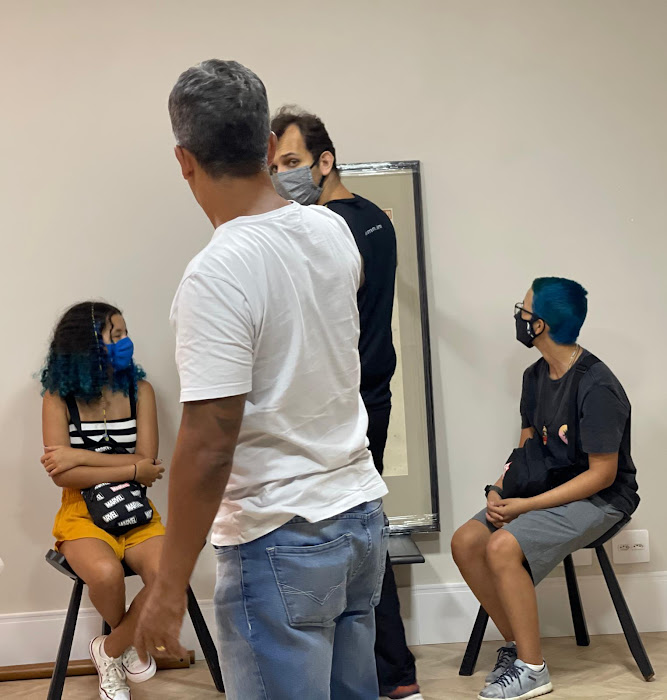
(With Senior Master Julio Camacho. Dedicating Time.)
Por isso, creio que a melhor maneira de se perceber ter aproveitado ou não o momento é olhar para o que viveu. Aqui não me refiro a conquistas ou prêmios, digo, do tempo dedicado. Esse tempo pode ser mensurado, mas quanto efetivamente houve presença?
Se não houve, bom ter percebido, há tempo para ajuste, apesar de não sabermos o quanto. E não sabendo quanto, de novo, investir no processo é a melhor solução. Por isso, dormindo 10 horas ou 40 minutos, que seja o tempo suficiente, e ao acordar, continue aproveitando o tempo. O relógio é uma ferramenta, prenda-o a si, mas não se prenda a ele.
(Therefore, I believe the best way to determine whether you have truly made the most of a moment is to look at what you have lived. I am not referring to achievements or awards, but rather to the time dedicated. This time can be measured, but how much of it was truly lived with presence?
If there was none, it is good to have noticed—there is still time to adjust, though we do not know how much. And since we do not know how much, once again, investing in the process is the best solution.
So, whether you sleep for 10 hours or 40 minutes, let it be enough. And when you wake up, keep making the most of your time. The clock is a tool—wear it, but do not be bound by it.)
 Escritos Marciais