(From the Whole to the Part: An Exploration of the Personal Path)

(Year of 2025 – Wood Snake)
O Ano Novo Chinês, também conhecido como Festival da Primavera, é a celebração mais importante do calendário chinês. Ele segue um calendário lunissolar, o que faz com que sua data varie a cada ano, geralmente caindo entre 21 de janeiro e 20 de fevereiro. Cada ano é associado a um dos 12 animais do zodíaco chinês e a um dos cinco elementos (Madeira, Fogo, Terra, Metal e Água), formando um ciclo de 60 anos. As tradições incluem reuniões familiares, refeições especiais, queima de fogos, entrega de envelopes vermelhos com dinheiro (hung baau) e rituais.
(The Chinese New Year, also known as the Spring Festival, is the most important celebration in the Chinese calendar. It follows a lunisolar calendar, which causes its date to vary each year, usually falling between January 21 and February 20. Each year is associated with one of the 12 animals of the Chinese zodiac and one of the five elements (Wood, Fire, Earth, Metal, and Water), forming a 60-year cycle. Traditions include family gatherings, special meals, fireworks, the giving of red envelopes with money (hung baau), and rituals.)
Além do ciclo de 12 anos dos animais do zodíaco, o calendário chinês também incorpora a influência das polaridades do Yin e Yang e dos cinco elementos. Isso forma um ciclo maior de 60 anos (12 animais × 5 elementos), onde cada ano alterna entre uma polaridade Yin ou Yang. Por isso, é comum a aposentadoria de um mestre ocorrer aos 60 anos. Simbolicamente, este é um indicativo de que a pessoa possui um elevado grau de maturidade, uma vez que passou por todos os animais e elementos. Contudo, cada combinação de animal, elemento e polaridade só se repete a cada 60 anos. Portanto, um ciclo completo de 120 anos representa a passagem por todas as variações possíveis, simbolizando a maturidade máxima que cada ser humano consegue atingir.
(In addition to the 12-year cycle of zodiac animals, the Chinese calendar also incorporates the influence of the polarities of Yin and Yang and the five elements. This forms a larger 60-year cycle (12 animals × 5 elements), where each year alternates between a Yin or Yang polarity. Therefore, it is common for a master to retire at the age of 60. Symbolically, this indicates that the person has reached a high level of maturity, having passed through all the animals and elements. However, each combination of animal, element, and polarity only repeats every 60 years. Therefore, a complete cycle of 120 years represents the passage through all possible variations, symbolizing the maximum maturity that any human being can attain.)
É importante notar que os 120 anos de vida são raros para um ser humano. Imagino que essa suposição seja mais um instrumento simbólico sobre a inviabilidade da maturidade completa. Contudo, mesmo inviável, ela é possível.
(It is important to note that 120 years of life are rare for a human. I imagine that this assumption is more of a symbolic tool about the unfeasibility of complete maturity. However, even though it is unfeasible, it is possible.)
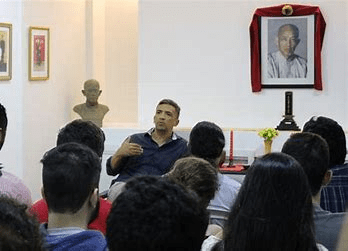
(Colloquium with Senior Master Julio Camacho)
Como primeira atividade do ano no Instituto Julio Camacho, tivemos um colóquio com nosso mestre tratando justamente da celebração do Ano Novo Chinês. Particularmente, gosto muito dessas atividades pelo potencial de aprofundamento simbólico. Como lidamos com uma cultura tão distante e diferente da nossa, imergir em seus aspectos é um processo riquíssimo de aperfeiçoamento da própria cultura, além de ser um convite para uma nova avaliação da nossa própria bagagem cultural.
(As the first activity of the year at the Instituto Julio Camacho, we had a colloquium with our master specifically about the celebration of the Chinese New Year. Personally, I really enjoy these activities because of their potential for symbolic depth. Since we are dealing with a culture so distant and different from our own, immersing ourselves in its aspects is a rich process of improving our own culture, as well as an invitation to re-evaluate our own cultural baggage.)
De tudo o que foi dito, um aspecto foi o ponto ápice para mim. Si Fu explicava que poucos feriados têm a capacidade de unificar um país gigantesco como a China no sentido de se preparar e efetivamente vivê-lo, como a celebração do Ano Novo. De fato, é um único momento em que o país está todo voltado a um único objetivo. Curiosamente, e não por acaso, todo o restante daquele ano é vivido de maneira individual, ainda que a partir do pacto firmado no seu início.
(Of everything that was said, one aspect stood out as the highlight for me. Si Fu explained that few holidays have the ability to unify such a gigantic country as China in terms of preparation and truly living it, like the celebration of the New Year. Indeed, it is the only moment when the entire country is focused on a single objective. Interestingly, and not by chance, the rest of that year is lived individually, even though it originates from the pact made at the beginning.)
Por isso, os animais, elementos e polaridades. Cada um deles ou delas possui características atribuídas, e a partir disso se define a direção para onde seguir. No caso da serpente, entre outras características, é associada à capacidade de reinvenção por conta da troca de pele comum a esse animal. Por isso, ao longo do ano, é preestabelecido que este será um período em que as atitudes pessoais reverberem a ideia ou os atributos da reinvenção ou transformação.
(That’s why the animals, elements, and polarities. Each of them has attributed characteristics, and from that, the direction to follow is defined. In the case of the snake, among other characteristics, it is associated with the ability to reinvent itself due to the shedding of its skin, which is common to this animal. Therefore, throughout the year, it is predetermined that this will be a period in which personal actions will resonate with the idea or attributes of reinvention or transformation.)
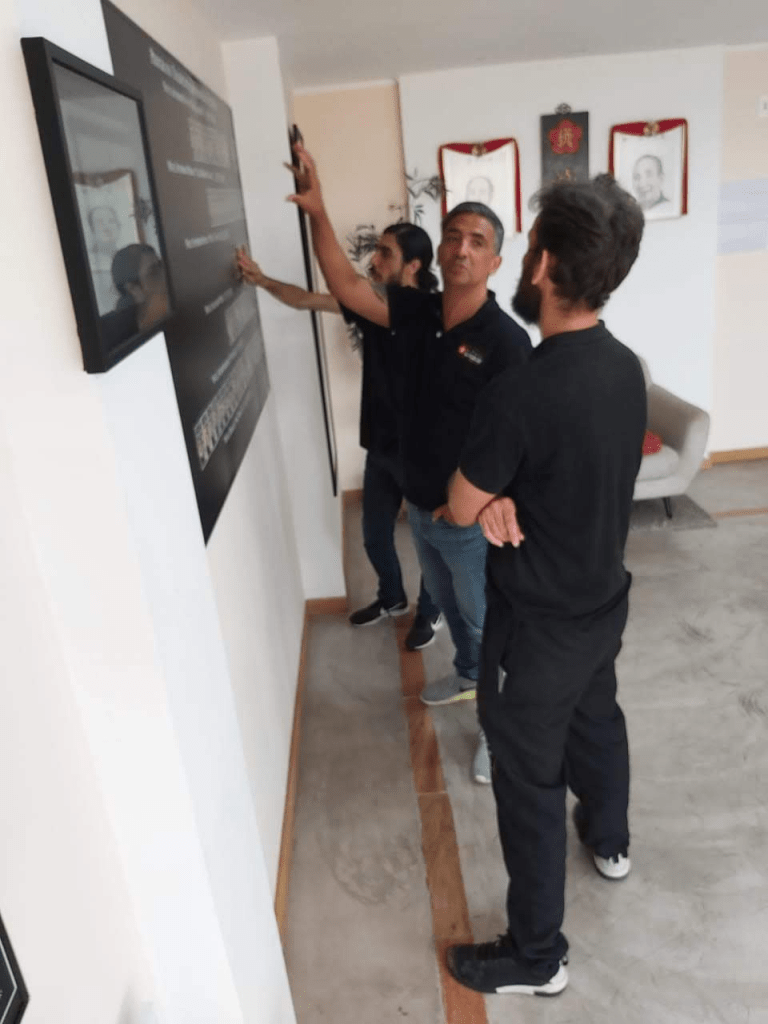
(Developing Kung Fu with My Master)
Creio que seja comum às pessoas de berço cristão a associação do símbolo da serpente com o mal. No caso de parte da minha família, justamente por conta dessa associação, a serpente também é comparada com símbolos de inveja, peçonha ou desconfiança. Em sonhos, já ouvi interpretações de que sonhar com cobra é sinal de que haverá traição, ou conversas que associavam o dito sonho a cenários interpretados como traiçoeiros. E, portanto, o ultimato: “foi a cobra que você sonhou.”
(I believe it is common for people of Christian upbringing to associate the symbol of the snake with evil. In the case of part of my family, precisely because of this association, the snake is also compared to symbols of envy, venom, or distrust. In dreams, I have heard interpretations that dreaming of a snake is a sign that there will be betrayal, or conversations that associated the dream with scenarios interpreted as treacherous. And, therefore, the ultimatum: “It was the snake you dreamed of.”)
Por conta do meu acesso a uma cultura tão distante como a chinesa e também a algum nível de contato com outro saber incomum ao meu berço, que é a psicanálise, pude entender que sim, é possível associar a serpente ao mal, como à transmutação. Portanto, em algum nível, o que vale é sua bagagem cultural e fé.
(Because of my access to such a distant culture like the Chinese one and also some level of contact with another form of knowledge unfamiliar to my upbringing, which is psychoanalysis, I was able to understand that yes, it is possible to associate the snake with evil, as well as with transmutation. Therefore, at some level, what matters is one’s cultural baggage and faith.)
Em meu caso, a condição de troca de pele vem bem a calhar, considerando os caminhos que pretendo percorrer e a necessidade de me reinventar. Já passou o momento em que devo confrontar meus medos e fazer o que é preciso, sobretudo se for deixar para trás a camada de pele que não mais me comporta. Aliás, sendo este um ano comum a esse ato, imagino que será mais fácil. Por fim, lembro que tudo isso é uma escolha: poderia ser “esta”, “aquela” ou qualquer outra, até porque cobras são apenas cobras.
(In my case, the condition of shedding skin comes in handy, considering the paths I intend to follow and the need to reinvent myself. The moment has passed when I must confront my fears and do what is necessary, especially if it means leaving behind the layer of skin that no longer fits me. In fact, since this is a year associated with this act, I imagine it will be easier. Finally, I remind myself that all of this is a choice: it could be “this one,” “that one,” or any other, because after all, snakes are just snakes.)
 Escritos Marciais