A Translation of Fighting
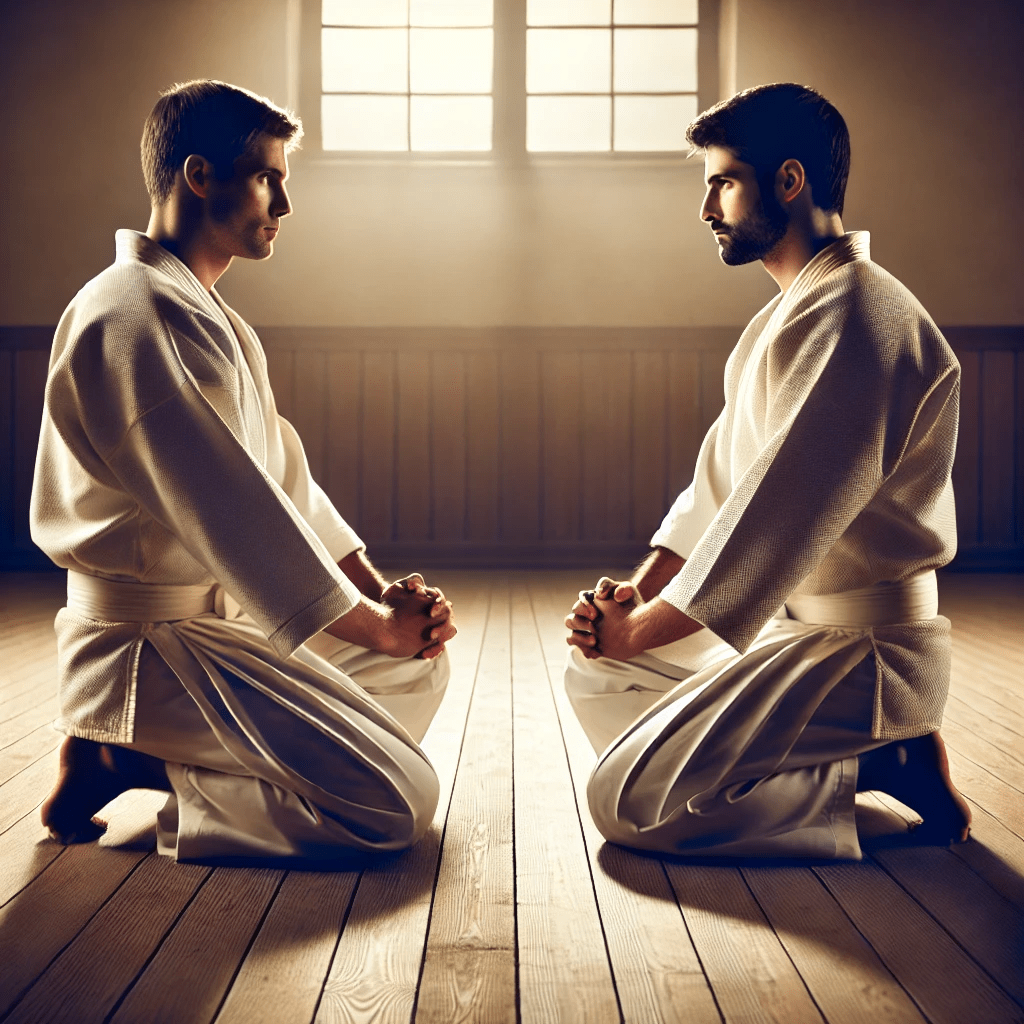
(Representation of Fighting. Image created by Artificial Intelligence.)
O entendimento sobre luta é diverso. O mais comum é representado pelo embate físico, inclusive como forma de entretenimento. Nestes casos, é necessário condicionamento físico e entendimento específico das regras que geram a disputa. No texto, o objetivo é tratar da luta como entendo a sua origem. Neste caso, ela não está restrita a super atletas, mas comporta o dia a dia de pessoas comuns e as adversidades enfrentadas por aqueles que vivem por detrás de camadas televisivas ou, ao menos, quando a principal imagem não gera engajamento, já que a preocupação aqui não é ganhar ou perder.
(The understanding of combat is diverse. The most common interpretation is represented by physical confrontation, often as a form of entertainment. In such cases, physical conditioning and a specific understanding of the rules governing the contest are required. In this text, the aim is to address combat as I understand its origins. In this sense, it is not limited to elite athletes but encompasses the daily lives of ordinary people and the adversities faced by those living beyond the layers of television screens or, at the very least, when the primary image does not generate engagement, as the concern here is not about winning or losing.)
Dividindo a luta em três momentos, refiro-me ao pré, momento de preparo ao evento principal; trans, transcorrer do evento principal; e pós, momento em que se chega ao fim. Entendo que a ação, no sentido de intervenção, ocorre no pré e no pós, já que o pré diz respeito ao início de tudo, e o transevento, como o momento “chave,” ocorre naturalmente. Quero dizer, se bem preparado, no transevento não é preciso fazer mais nada. Analisando de maneira aprofundada, é possível perceber que o que chamei de pós, na realidade, é o pré-evento do próximo, muito mais preparado, já que podemos nos apoiar na experiência pregressa.
(Dividing combat into three phases, I refer to the pre-phase, the moment of preparation for the main event; the trans-phase, the unfolding of the main event; and the post-phase, the moment when it comes to an end. I understand that action, in the sense of intervention, takes place in the pre-phase and the post-phase, as the pre-phase concerns the beginning of everything, while the trans-phase, as the “key” moment, occurs naturally. That is to say, if well-prepared, there is no need to do anything further during the trans-phase. Upon deeper analysis, it becomes evident that what I called the post-phase is, in reality, the pre-phase of the next event—now much more refined, as we can rely on past experience.)
Um exemplo disto é iniciar um dia de atividades. A forma como se prepara para aquelas atividades define um desenrolar positivo ou não do dia. Basta sair atrasado para o primeiro compromisso para percebermos como as coisas tenderão a se atrapalhar. Ao fim, refletindo como foram os momentos predecessores, é possível ajustar a estratégia para o próximo e assim seguir.
(An example of this is starting a day of activities. The way you prepare for those activities determines whether the day will unfold positively or not. Simply being late for the first commitment shows how things tend to get off track. In the end, by reflecting on the preceding moments, it’s possible to adjust the strategy for the next one and continue on.)
Outro aspecto que considero ao tratar sobre a luta é o inesperado. Por definição, não é possível prever o que não se espera. Portanto, o que se deve fazer é ter plena consciência das capacidades e limitações pessoais. Desta forma, seremos mais eficazes ao atuar em cenários não antecipados, já que, absolutamente conscientes de si, será mais fácil fazer ajustes. Portanto, uma base bem estruturada e algum nível de desapego sobre o que diz respeito ao sucesso ou fracasso é o espírito esperado daqueles que se definem como lutadores.
(Another aspect I consider when discussing fighting is the unexpected. By definition, it’s impossible to predict what is unexpected. Therefore, what should be done is to have a full awareness of one’s own abilities and limitations. In this way, we will be more effective in acting in unforeseen scenarios, since, fully aware of ourselves, it will be easier to make adjustments. Thus, a well-structured foundation and some level of detachment from what relates to success or failure is the spirit expected from those who define themselves as fighters.)
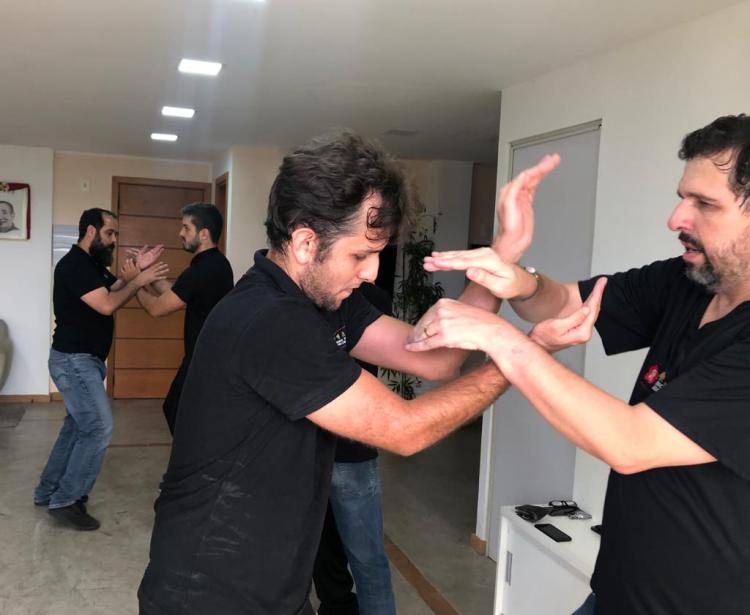
(Chi Sau Practice. Barra da Tijuca Transmission Center, O2. Year 2017.)
O Chi Sau, exercício utilizado no Sistema Ving Tsun que aprofunda a percepção corporal e a conexão com o adversário já que propõe que as mãos estejam sempre aderidas e toda a movmentação considere a amplitude do cenário, é bastante emblemático neste sentido. Lembro que uma das primeiras vezes em que meu Si Fu, Mestre Senior Julio Camacho, foi me orientar a execução dos movimentos, ele foi bastante específico com relação a base, explicando que antes de tocar o outro, é fundamental que se tenha uma estrutura sólida. Isso deve ser considerado em qulquer cenário.
(Chi Sau, an exercise used in the Ving Tsun System that deepens bodily perception and connection with the opponent since it proposes that the hands always remain in contact and the movement considers the full scope of the scenario, is quite emblematic in this sense. I remember that one of the first times my Si Fu, Senior Master Julio Camacho, guided me in executing the movements, he was very specific about the stance, explaining that before touching the other, it’s essential to have a solid structure. This should be considered in any scenario.)
Anos mais tarde, conduzindo uma prática com alguns irmãos Kung Fu e novos membros, quis fazer uma demonstração com um praticante novo, aqui vale um parênteses e volto a relevância do preparo, a decisão que tomei não foi a mais inteligente, já que não conhecia bem aquela pessoa nem mesmo o seu potencial, outro problema, por distração, desconsiderei a recomendação tão antiga de meu mentor e me posicionei totalmente sem base. O resultado foi que após seu golpe, que foi totalmente inesperando no sentido de pressão para mim, cai de costas no chão e, ato sequente, lembrei da imagem de Si Fu de anos atrás e o que ele me disse.
(Years later, while leading a practice with some Kung Fu brothers and new members, I wanted to make a demonstration with a new practitioner. Here, I must pause and return to the importance of preparation. The decision I made wasn’t the most intelligent, as I didn’t know that person well nor their potential. Another issue, due to distraction, was that I disregarded the long-standing advice of my mentor and positioned myself completely without a solid stance. The result was that after their strike, which was completely unexpected in terms of pressure on me, I fell backward to the ground and, in that instant, I recalled the image of Si Fu from years ago and what he had told me.)
Depois disto, foi curioso ver a movimentação de todos os presentes. Se aproximaram de mim para verificar se eu tinha me machucado, não foi o caso, tive tempo de me preparar para o impacto no chão, também me chamou a atenção postura de quem me golpeou, bastante solícito e preocupado com o que havia ocorrido. Levantei, conversamos um pouco sobre o ocorrido e a aula transcorreu normalmente.
After that, it was interesting to observe the reactions of everyone present. They approached me to check if I was injured, but that wasn’t the case; I had time to prepare for the impact with the ground. What also caught my attention was the attitude of the one who struck me, very helpful and concerned about what had happened. I got up, we talked a bit about the incident, and the class proceeded as usual.
(Ceremony of Discipleship Reaffirmation. Year 2019.)
A reflexão que aconteceu após o incidente foi sobre a postura marcial. Falamos sobre responsabilização e a capacidade de aprender diante de cenários diversos. Aprendi com meu Si Fu que devemos nos responsabilizar por nossa vida, mesmo diante de cenários que fogem do nosso controle ou indesejados. Como o caso foi de um cenário indesejado, expliquei sobre como a minha postura estava em desacordo, em algum nível, com a perspectiva marcial que é a de preparo. Ao mesmo tempo, foi justamente aquele cena que reforçou o comentário que Si Fu reproduz há tantos anos que é o de iniciar qualquer movimento com uma base sólida.
(The reflection that followed the incident was about martial posture. We talked about responsibility and the ability to learn in different scenarios. I learned from my Si Fu that we must take responsibility for our lives, even in situations that are beyond our control or undesirable. Since this case involved an undesirable scenario, I explained how my posture was, to some extent, in disagreement with the martial perspective, which is one of preparation. At the same time, it was precisely that scene that reinforced the comment Si Fu has repeated for so many years, which is to begin any movement with a solid foundation.)
Poucas são as pessoas que trabalham com o que se chama de luta e, portanto, podem ter um olhor desenvolvido para este tipo de percepção, por isso, cabe a mim informar e reforçar que essa possibilidede está disponível a todos que desejeram. Basta transformar a luta nos afazeres do dia a dia, usar a competência do preparo e aprendizado constante aos cenários mais comuns e entender, por fim, que rotina não é sinônimo de mesma coisa em dias seguidos. Luta pode inclusive ser um mecânismo para atualizar este olhar.
(Few are the people who work with what is called fighting and, therefore, can develop an eye for this type of perception. That is why it is up to me to inform and reinforce that this possibility is available to all who wish it. It is enough to transform fighting into the tasks of everyday life, using the competence of preparation and constant learning in the most common scenarios, and finally understanding that routine is not synonymous with doing the same thing on consecutive days. Fighting can even be a mechanism to update this perspective.)
 Escritos Marciais